

Campsite
Essential Campsite Arrival Guide
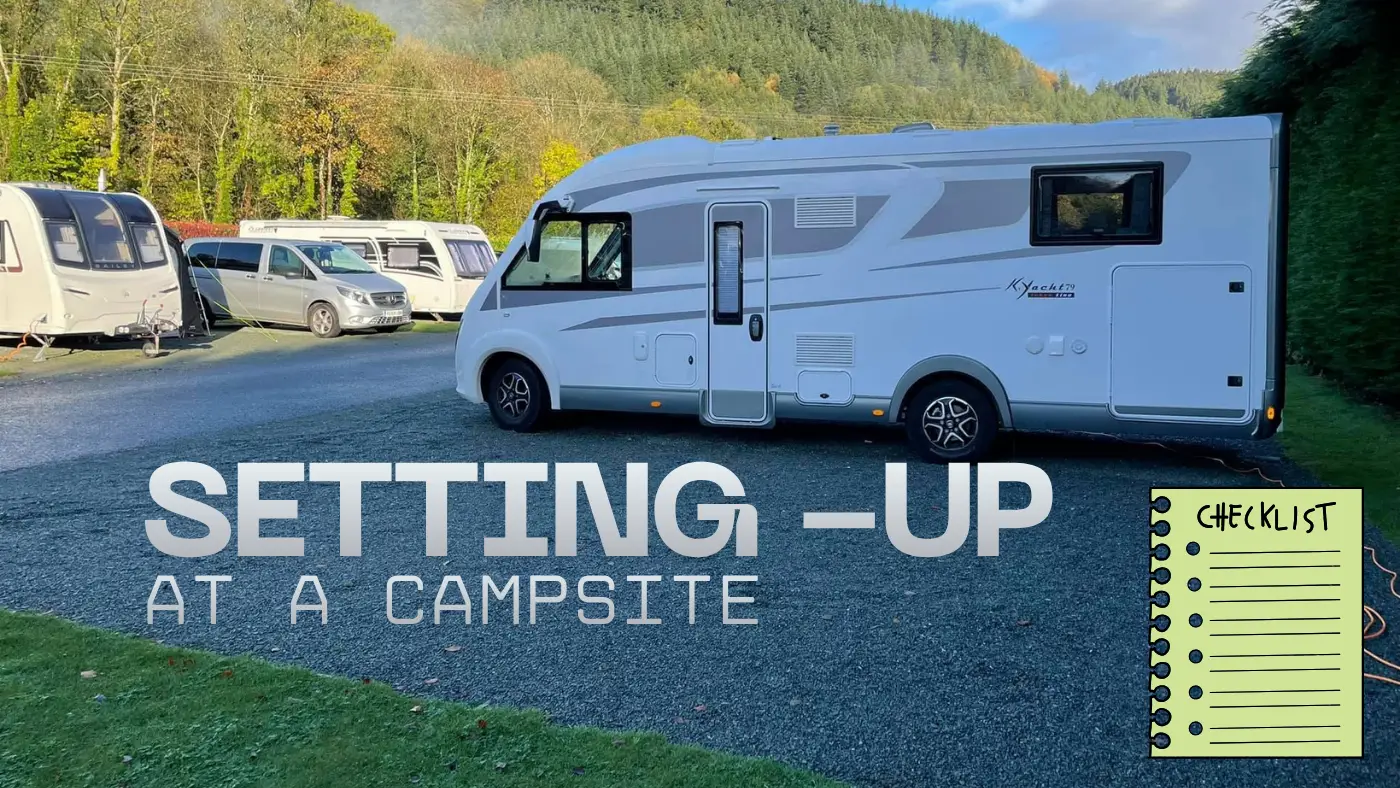
Check Pitch for Suitability
Inspect the campsite's dimensions, terrain, and potential obstacles. Look for a level spot to park your motorhome, ensuring adequate clearance from trees, rocks and other vehicles.
Fill Up with Fresh Water
If your motorhome's water tank is empty, connect your hose to the campground's fresh water supply and fill your tank. This provides you with a readily available water source for various purposes.
Check Ground Levels and Stabilisation
Use a levelling tool to ensure your motorhome is parked on a level surface. If the site is uneven, deploy levelling blocks or ramps under the wheels to achieve stability. You can use our free motorhome levelling tool to calculate how much each wheel needs to be raised to get your motorhome level.
Chock Tyres if Necessary
Place wheel chocks on both sides of the wheels to prevent your motorhome from rolling, especially when parked on an incline.
Deploy Hydraulic Levelling System
If your motorhome is equipped with a hydraulic levelling system, deploy it to further stabilise the vehicle. Use blocks or pads under the jacks to prevent them from sinking into soft ground. If you're considering having a system fitted, our guide to motorhome hydraulic levelling systems explains how these systems work and some of their main benefits.
Connect Electric Hookup
Plug your motorhome's power cord into the campground's electrical hookup. This provides electricity to your interior appliances and helps keep your leisure batteries charged. If you're considering replacing or upgrading them, our guide to motorhome leisure batteries explains the main battery types and what to consider when choosing one.
Connect Fresh Water if Available
If the campsite offers a fresh water hookup, connect your hose to maintain a constant supply of water. This is especially convenient for extended stays.
Connect Sewer if Available
If a sewer hookup is available, connect your motorhome's sewer hose to the designated dump station. Properly manage your waste disposal to ensure a clean and sanitary environment.
Set Up Awning and Outdoor Space
Extend your motorhome's awning and slide-out sections if applicable. Arrange outdoor furniture, such as chairs and tables, to create a comfortable outdoor living space. If you're deciding what equipment to take with you, our essential motorhome accessories guide covers useful equipment for travelling and setting up your motorhome.
Adjust Appliances and Systems
Switch your refrigerator from gas to electric mode when connected to power. Turn on the gas supply and test gas-powered appliances for functionality. If you're unsure about the different gases used in motorhomes, our guide to motorhome gas types explains the differences between Propane and Butane and some of the practical considerations when choosing between them. Adjust your thermostat for heating or air conditioning as needed.
Turn On Water Heater
If your motorhome has a water heater, turn it on to ensure a steady supply of hot water for bathing and washing.
Secure the Motorhome
Lock all doors, windows, and compartments to enhance security. Consider using additional locks or devices for added protection against theft.
Unpack and Organise
Open cabinets and secure compartments that were locked during travel. Begin unpacking essentials such as groceries, clothing, and personal items.
Set Up Entertainment and Connectivity
If desired, set up your TV antenna or satellite dish to enjoy entertainment options. Connect to available campground WiFi to stay connected online. Check your Starlink connection if you have Starlink.
Collect Facility Access Information
Obtain any door codes or keys required for accessing communal facilities like bathrooms, showers, and laundry rooms.
Make the Campsite Feel Like Home
Personalise your campsite by adding your own touch. Arrange items for convenience and fun! We often put up fairy lights on our awning.
Written by Nicky Michelmore